









































In the long run, Merkel’s decision to relinquish her role as leader of the centrist Christian Democratic Union following the latest in a string of defeats, this time in the Hesse state elections Sunday, and her announcement that she will not stand for re-election in 2021, may have the most sweeping impact on democratic values.
But the most immediate impact will unquestionably be in Brazil.
Sweeping to victory with more than 55% of the vote, Brazil’s new leader has pledged to appoint military leaders to top posts, stack the Supreme Court with right-wing judges and threaten political foes.
Argentina, Chile, Colombia, Paraguay and Peru have also turned to more conservative leaders, but none remotely as extreme as Bolsonaro.
Already, far-right candidates have swept to power or to leading opposition status across Europe. In Italy, two populist parties — the Five Star Movement and far-right League — have formed a ruling coalition. Hungary’s far-right, anti-immigration Prime Minister Viktor Orban won a third term as leader in April. In Poland, the ruling Law and Justice party is en route to dismantling the nation’s judicial system.
In Germany, the long centrist rule of Angela Merkel is being challenged at every turn by right-wing candidates, including the Alternative for Germany (AfD) party which last year won its first seats in the Bundestag and on Sunday swept into the state parliament of Hesse for the first time.
That Merkel has finally throw in the towel and renounced any hope for her continued moderate leadership of Germany is a tribute to what appears to be the growing right-wing tilt of the German electorate.
Unquestionably, Bolsonaro’s roots are deep in Brazil’s militant right. For Bolsonaro, this has meant a determined anti-LGBTQ stance, urging parents to beat their gay children.
During his campaign, he accused the right-wing military dictatorship that ruled Brazil with an iron fist from 1964 to 1985 of not killing enough dissidents, not using enough lethal force and not coming down hard enough on the nation’s free-wheeling media.
Even the string of pipe-bombs launched at liberal political figures and the media in the United States by a pro-Trump fanatic and Saturday’s massacre by a militant anti-Semite at a Pittsburgh synagogue seem not to have deterred voters from embracing Bolsonaro.
It was only the first tribute to the belief that Bolsonaro will allow little to stand in his way of returning Brazil to security and prosperity, at any cost.
Now, it may be in desperate danger. As Jonathan Watts, environment editor of London’s Guardian newspaper put it: “Bolsonaro has the backing of agribusiness and mining leaders, who are rubbing their hands in glee at the prospect of an Amazon denuded of its greatest protections. The markets — which are heavily driven by extractive industries — also love him.”
At the same time, Bolsonaro, during his long and somewhat undistinguished tenure as a back-bench member of Brazil’s parliament, has given some dangerous indications of what else may be in store. In 1999, he told an interviewer he would hardly hesitate to dissolve a Congress he described as “useless.”
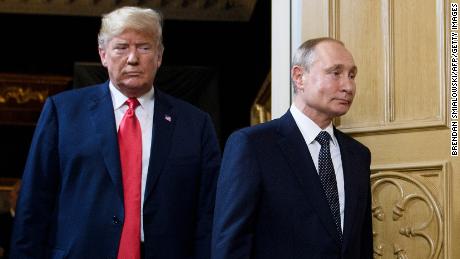
It’s hard to believe that Donald Trump himself could even consider embracing any such potentially sweeping and utterly dictatorial powers.
That the Brazilian people have done so appears to be an exercise in utter madness. But with each turn of the dial toward the right, further license is being given to extremes in nations that may ultimately, perhaps too late, come to regret their votes.