








































When an urgent issue presented itself in 2017, Trump chose the wrong side of argument over the events in Charlottesville. This time, the subject of his sympathies, it seems, is not neo-Nazis in America, but the regime of Saudi Crown Prince Mohammed bin Salman.
A central question now is just how far Trump may be prepared to go in defense of the kind of rabid values the Saudis now seem to have embraced. But even more important for American interests, at home and abroad, are the potential consequences.
Unlike Charlottesville, this time Trump may have his hand forced by a horrified Congress, apparently united in bipartisan agreement.

Four years later, the act was broadened to allow the President to sanction any violator of human rights anywhere in the world.
For some time, Trump has been prepared to overlook a host of questionable initiatives by bin Salman — vast Saudi human rights violations in the Yemeni civil war, provoked and pursued by Riyadh with the backing of the United States; an outrageous boycott of Qatar, which neighboring countries, led by Saudi Arabia, accused of funding terrorism; and the imprisonment and extortion of a number of wealthy Saudis, including opposition members of the royal family.
“They’re spending $110 billion on military equipment and on things that create jobs … for this country,” Trump told reporters Thursday. “I don’t like the concept of stopping an investment of $110 billion into the United States, because you know what they’re going to do? They’re going to take that money and spend it in Russia or China or someplace else.”
Of course, what Trump did not point out is that the crown prince, known as MBS, not to mention his family and fellow members of the royal family, far prefer to come to the United States, or Paris, London or Geneva, which would be likely to slap on similar bans, than to Moscow or Beijing to shop and, for some, drink the alcohol that is banned at home.
Throughout his presidency, Trump has been keenly aware of the need to shore up and arm Saudi Arabia — Iran’s principal foe in the Middle East — portraying Iran as the leading sponsor of terrorism in the region.
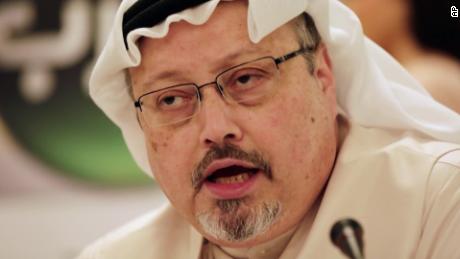
But with Khashoggi possibly abducted or dead, Trump may no longer be able to turn a blind eye to Saudi’s moral failings. Congress may well force Trump into measures that could hold vast consequences. The cost of labeling Saudi Arabia and its crown prince pariahs could be a high one.

Saudi Arabia as a nation and an economy are better insulated from the impact of sanctions than Russia. Still, both are heavily dependent on oil revenues, so sanctions against the sale of Saudi oil could affect that nation’s economy more deeply than Russia, which is also heavily dependent on oil. But with just 32 million people to worry about versus Russia’s 144 million, and with vast sovereign wealth funds to cushion any impact, the Saudis could presumably hold out far longer than Russia.
At the same time, Saudi Arabia, as the tentpole nation of the OPEC oil cartel, could lead to a retaliation that risks hitting America’s economy hard. Restricting the sale of Saudi oil would only lead to higher oil prices, layered on top of a trade war with China, rising interest rates fueled by a ballooning budget deficit on the back of a sweeping tax cut and a plunging stock market right before the midterm elections.
I first met Khashoggi more than a decade ago, in the offices in Riyadh of Prince Alwaleed bin Talal, the wealthiest investor in Saudi Arabia, who has hardly seen eye to eye with MBS and this side of the royal family.